
Black Mustard Oil vs Yellow Mustard Oil — Which One Should You Use?
- Mohammad Aman Khan
- Apr 29
- 3 min read

By FARMIT Foods | 5 min read
If you've ever stood in a kitchen store staring at two bottles — one darker, one lighter — and wondered what the actual difference is, you're not alone. Black mustard oil and yellow mustard oil come from the same plant family but they're not the same thing. Each has its own personality, flavour, and best use.
Let's settle this once and for all.
Where Do They Come From?
Black mustard oil is pressed from Brassica nigra seeds — small, dark, intensely pungent seeds that have been used in Indian kitchens for centuries. These are the seeds you hear crackling in hot oil at the start of a tadka.
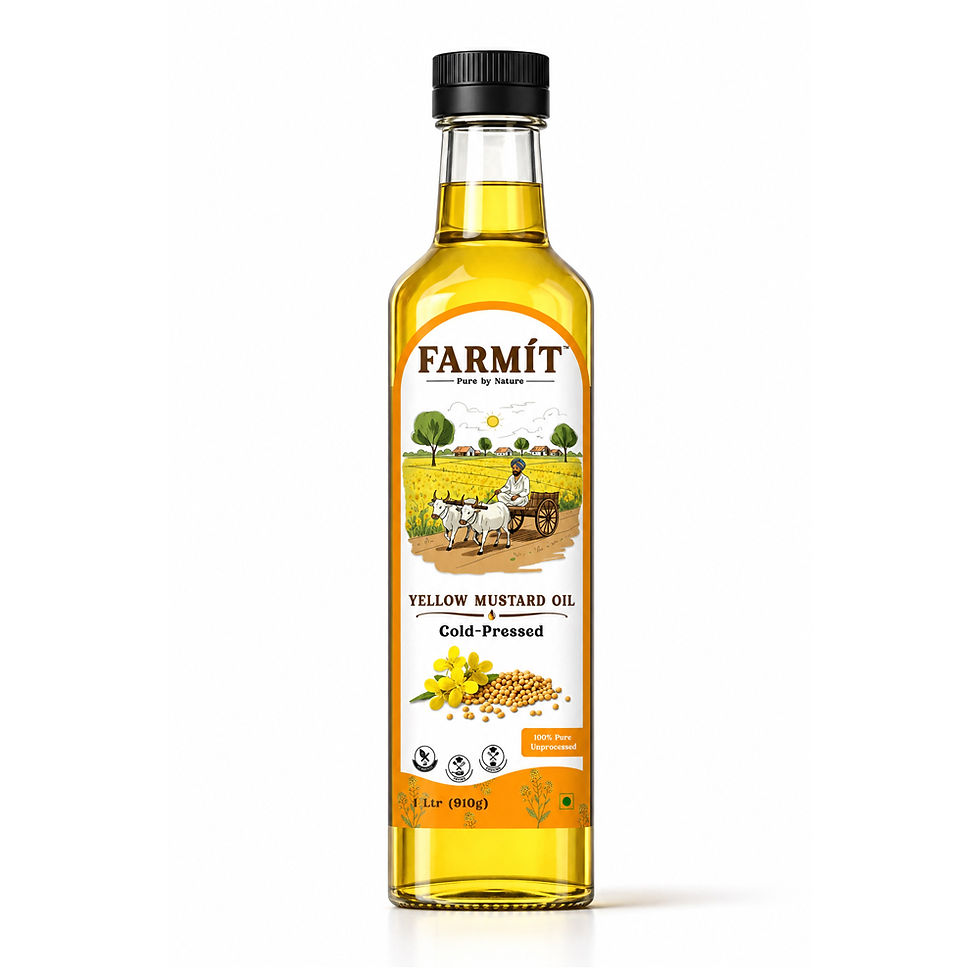
Yellow mustard oil is pressed from Brassica juncea seeds — slightly larger, golden-yellow, with a milder but still distinct sharpness. This is the variety most commonly grown across Uttar Pradesh, Rajasthan, and Punjab — the heartland of Indian mustard farming.
Both oils, when cold pressed the kachi ghani way, retain their full nutritional profile. The difference lies in intensity, application, and flavour.
The Key Differences at a Glance
Black Mustard Oil | Yellow Mustard Oil | |
Seed colour | Dark brown/black | Golden yellow |
Pungency | Very strong, sharp | Mild to medium |
Allyl isothiocyanate | Higher | Moderate |
Colour | Deep amber | Bright golden |
Flavour in cooking | Bold, rustic | Smooth, versatile |
Best regional use | Bengali, South Indian | North Indian, Punjabi |
Hair & skin use | Excellent | Excellent |
Smoke point | High | High |
Taste & Cooking — The Real Difference
Yellow mustard oil is more approachable. It brings that characteristic mustard warmth without overpowering the other ingredients. It's the everyday cooking oil of UP, Bihar, and Punjab — perfect for parathas, sabzis, dal tadka, and even marinades. It's also the more comfortable starting point if someone is transitioning from refined oil.
Neither is "better." They're different tools for different jobs.
For Hair & Skin — Which Wins?
Honestly? Both are excellent — and both have been used for centuries in Indian beauty rituals.
Black mustard oil has slightly higher concentrations of allyl isothiocyanate and selenium, which stimulate scalp circulation more intensely. It's the classic choice for a champi (head massage) in North Indian households — warming, stimulating, and deeply nourishing.
Yellow mustard oil is gentler on the skin and scalp. If you have a sensitive scalp or prefer a less intense massage experience, yellow is the better choice. It absorbs well, conditions without heaviness, and leaves hair soft and strong.
For body massage — especially in winters for joint pain and muscle stiffness — both work wonderfully when warmed slightly.
Which One Is Right for You?
Choose Black Mustard Oil if you:
Cook Bengali, South Indian, or Odia cuisine regularly
Want maximum pungency and bold flavour
Prefer a stronger scalp massage oil
Make pickles and preserves at home
Choose Yellow Mustard Oil if you:
Cook everyday North Indian food — sabzi, dal, paratha, roti
Are new to mustard oil and want to ease into it
Prefer a gentler option for skin and hair
Want a versatile oil that works across all dishes
Best answer? Keep both. Use yellow as your daily cooking oil and black for special dishes, tadkas, and hair care. That's exactly how traditional Indian kitchens stocked their shelves.
How FARMIT Cold Presses Both
At FARMIT, both our black and yellow mustard oils are cold pressed in small batches from seeds sourced directly from farmers in Uttar Pradesh. No heat treatment. No chemical solvents. No blending with cheaper oils.
What you get is pure kachi ghani oil — the kind that smells like it should, tastes like it should, and does what mustard oil was always meant to do.
The Bottom Line
Black mustard oil and yellow mustard oil are siblings, not rivals. Each brings something unique to your kitchen and your self-care routine. Understanding the difference means you can use both intelligently — and get the most out of every drop.
FARMIT Foods is a Rampur-based brand bringing pure, farm-sourced mustard oil and desi ghee to Indian households. Every bottle supports local farmers and time-honoured traditions.
Comments